Summary
Apricot kernels contain amygdalin, a plant compound that gut bacteria can turn into cyanide. Laetrile is a related compound. Both are sold as “vitamin B17,” which is not a vitamin. This remedy was actually tested. The result was negative.
A 1982 study funded by the National Cancer Institute gave amygdalin to 178 people with cancer, most in good general condition. It had no comparison group. Of 175 who could be evaluated, one met the criteria for a response. Several had signs of cyanide poisoning. The authors called it a toxic drug that is not effective as a cancer treatment.
A 2015 Cochrane review, which accepts only trials that assign patients by chance, found none. It still judged laetrile’s balance of risk and benefit unambiguously negative.
How much cyanide a dose releases depends partly on a person’s gut bacteria. That evidence comes from animal and lab studies. A 2022 review said there is currently no foolproof way to set a safe oral dose for one person.
The National Cancer Institute and Cochrane both name high-dose vitamin C as raising the risk. The human evidence is one published case.
In May 2024 the Food and Drug Administration warned about specific lots of Apricot Power seeds with high amygdalin levels, after the firm declined a recall. Anyone taking apricot kernels or laetrile should tell their oncology team. This is education, not medical advice.
In August I wrote about fenbendazole, and I said that nobody knows whether it works, because the trial registries showed no cancer trial of it when I searched. That is a real failure. Off-patent compounds do not attract the money required to test them, and people who point this out are not conspiracy theorists. They are describing how drug development is financed.
But that argument has a natural next question, and it is the honest one: what happens when the trial does get funded?
Apricot seeds are the answer. This is the compound where the study got done.
What it is, and where the name came from
Amygdalin is a cyanogenic glycoside found in the kernels of Prunus fruits: peaches, bitter almonds, apricots. Laetrile is a related semi-synthetic compound. The two names get used interchangeably, and the reviews are careful to note that they are not actually the same thing (Milazzo, Supportive Care in Cancer, 2007).
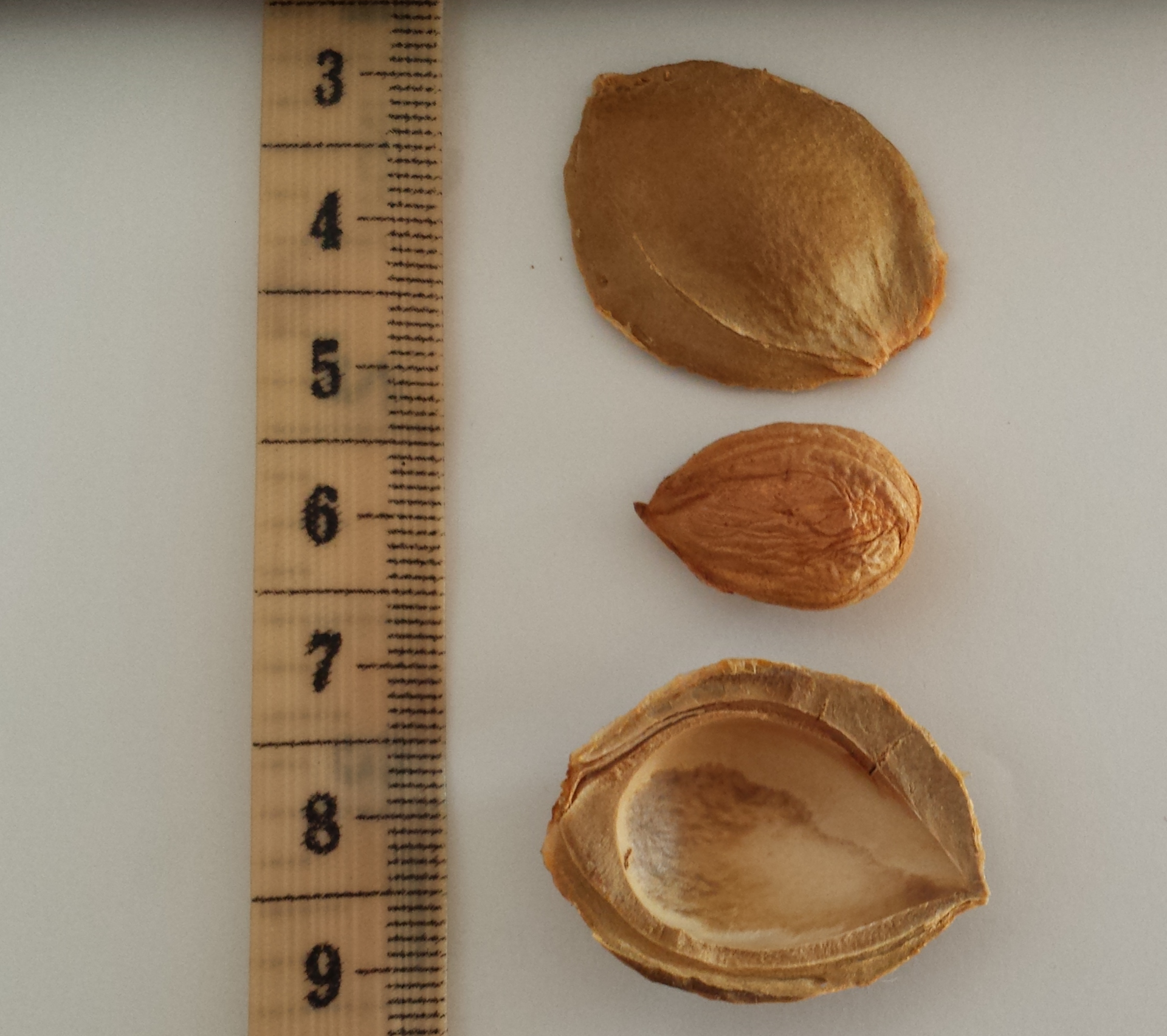
An apricot kernel against a centimetre scale. Photograph by Iulian.serbanoiu, CC BY-SA 3.0, via Wikimedia Commons.
The third name is the one that matters commercially: vitamin B17.
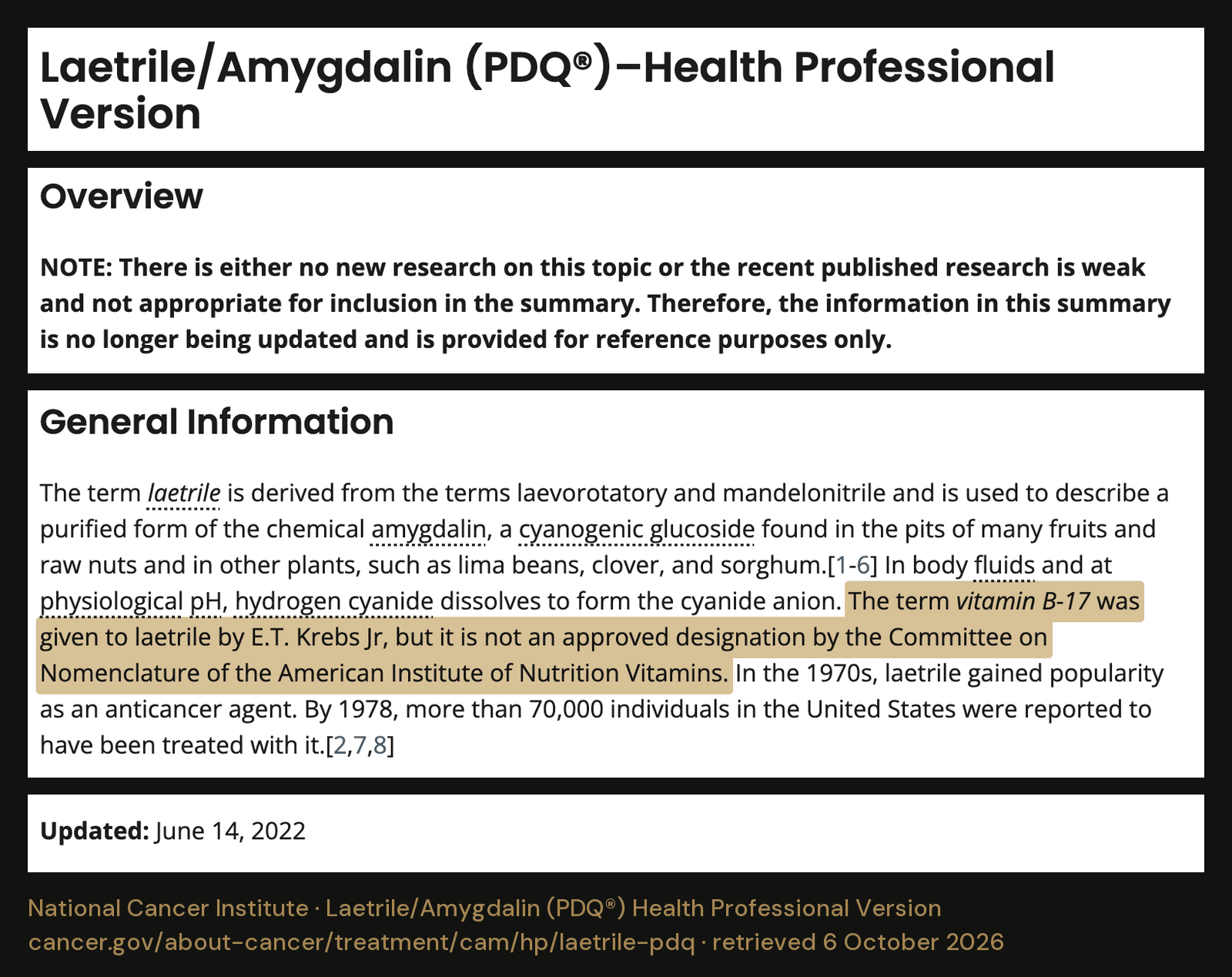
It is not a vitamin. The National Cancer Institute’s summary on laetrile, which the agency last updated in June 2022 and states it is no longer updating, records where the name came from. The term vitamin B-17 was given to laetrile by E.T. Krebs Jr. It is not an approved designation by the Committee on Nomenclature of the American Institute of Nutrition Vitamins.
That name does specific work, and the sellers do the work out loud. When the FDA wrote to one seller in June 2017, it recorded that the capsules and seeds shipped bundled with a book. It quoted the book asking whether the rheumatic diseases and cancer are all related, directly or indirectly, to a simple vitamin B17 deficiency. That is the offer as the seller frames it. Not a treatment to start. A shortfall to correct.
I want to be fair about the underlying science before going after the claim. Amygdalin is not inert. A 2023 review in the International Journal of Molecular Sciences looked at lung, breast, prostate, colorectal, cervical and gastrointestinal cancer models. It found evidence that amygdalin induces apoptosis in cancer cells, inhibits proliferation, and slows metastatic spread (Spanoudaki, IJMS, 2023). That work is real and I am not going to pretend otherwise.
What the same review concluded is that the evidence “cannot support a recommendation of the use of nutritional supplements with amygdalin,” almost entirely because of the cyanide.
The study that actually happened
Laetrile was not a fringe curiosity in the 1970s. By 1978, more than 70,000 people in the United States were reported to have been treated with it, according to NCI. The question got tested rather than dismissed.
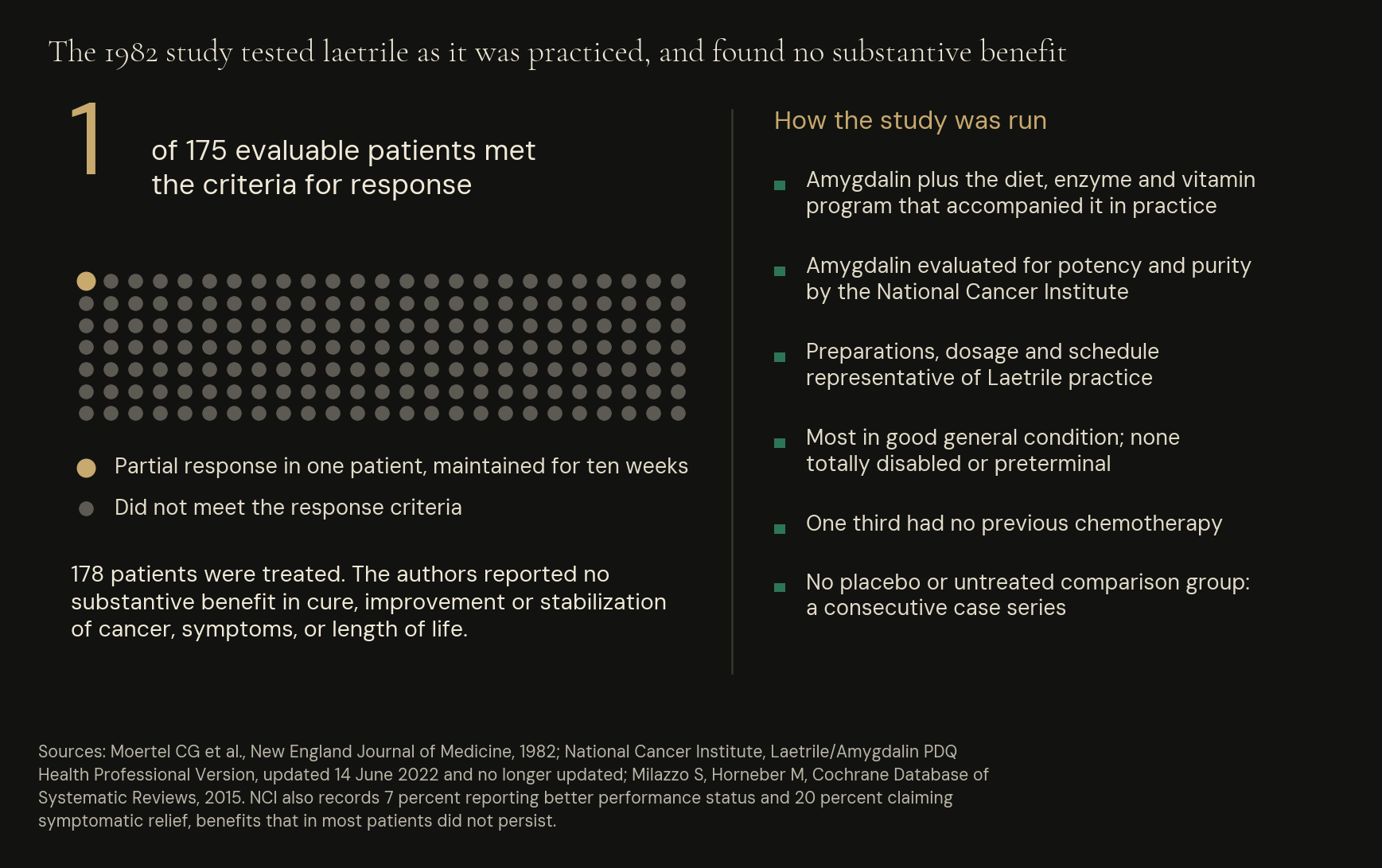
In 1982, the New England Journal of Medicine published the result. It covered 178 patients with cancer treated with amygdalin plus the “metabolic therapy” program of diet, enzymes and vitamins that accompanied it in practice (Moertel, NEJM, 1982). It was run by Charles Moertel and colleagues. The National Cancer Institute funded it and evaluated the amygdalin for potency and purity.
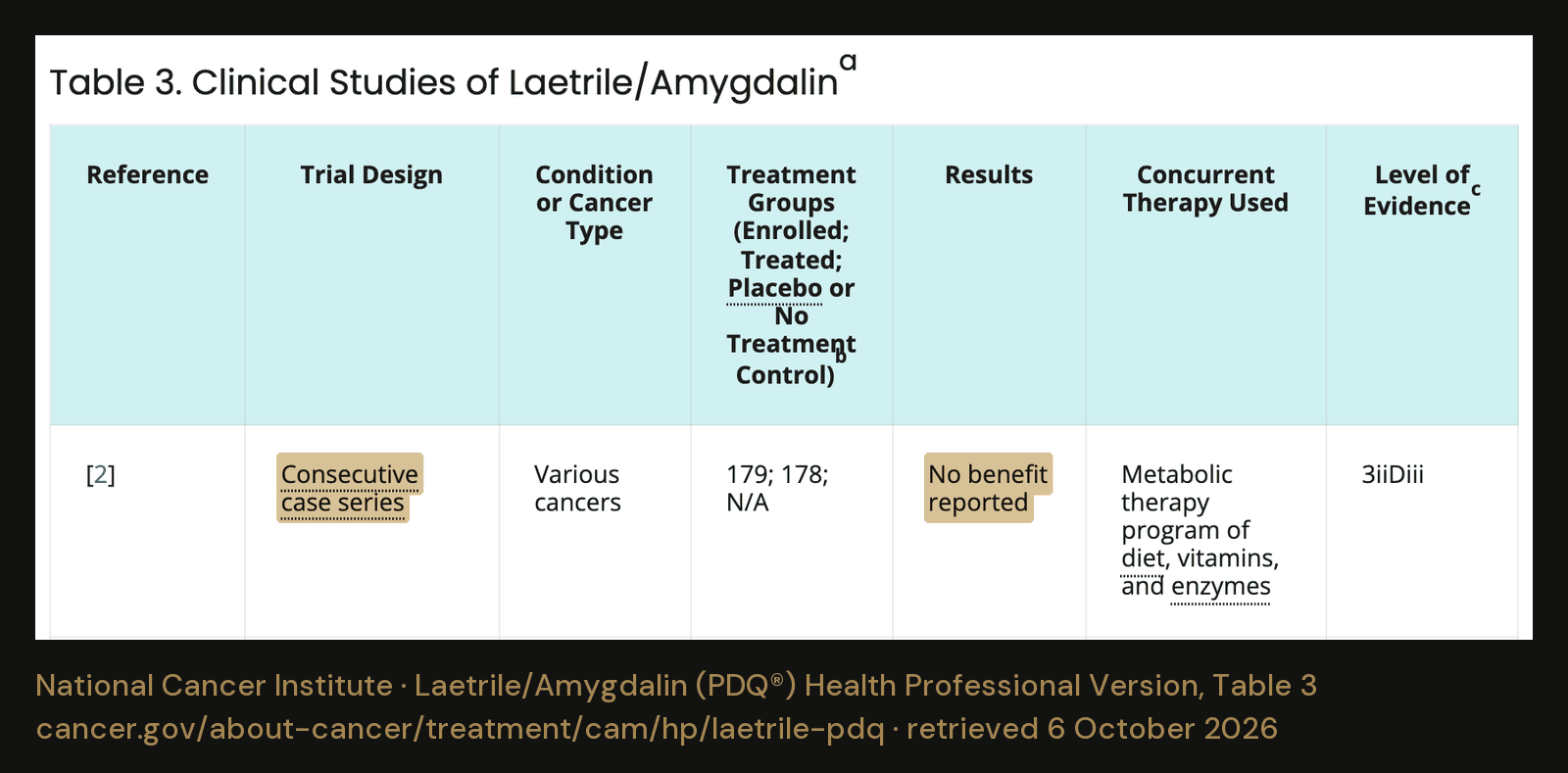
Say what it was before anything else, because anyone who wants to dismiss what follows will reach for this first. It was not a controlled trial. Everyone enrolled received amygdalin, and there was no placebo group and no untreated comparison group. NCI’s own evidence table classifies it as a consecutive case series, and so does the Cochrane review. Better to put that on the table now than to concede it later.
Then read the design carefully, because the design is the argument.
Patients received amygdalin plus the full metabolic therapy program that accompanied it in practice: diet, enzymes, vitamins. The preparations, the dosage and the schedule were, in the authors’ words, representative of past and present Laetrile practice. They tested the protocol as it was actually being sold, not a stripped-down version of it.
And then the part that anticipates the standard objection. The great majority of these patients were in good general condition. None was totally disabled or in preterminal condition. One third had not received any previous chemotherapy.
The usual defense of a negative alternative-medicine trial is that they only gave it to people who were already dying, already wrecked by conventional treatment, already beyond help. That defense is not available here. These were people well enough to respond, if there had been anything to respond to.
The result, in the authors’ own words: no substantive benefit in terms of cure, improvement or stabilization of cancer, improvement of symptoms related to cancer, or extension of life span.
Substantive is carrying weight in that sentence, and it is better to be precise about it than to be corrected about it. Of 175 evaluable patients, exactly one met the criteria for response: a patient with gastric carcinoma and cervical lymph node metastasis, whose partial response was maintained for ten weeks. NCI’s summary of the same study records that 7 percent of patients reported an improvement in performance status and 20 percent claimed symptomatic relief. In most patients, it says, these benefits did not persist. That is why the authors wrote no substantive benefit rather than none at all, and it is the honest version. A seller quoting the 20 percent is quoting a figure the same page reports as mostly not lasting, from a study whose authors concluded the drug does not work.
And the harm showed up in the same study. Several patients had symptoms of cyanide toxicity or blood cyanide levels approaching the lethal range. The authors’ conclusion was one sentence: amygdalin is a toxic drug that is not effective as a cancer treatment.
A point of precision, because it gets used against this
If you go looking, you will find that the Cochrane review on laetrile reports finding no randomized or quasi-randomized trials at all. Its searches were updated in June 2018 (Milazzo and Horneber, Cochrane Database of Systematic Reviews, 2015). A companion systematic review found 36 reports meeting its inclusion criteria, and not one was a controlled clinical trial. There were three nonconsecutive case series, two consecutive case series, six best case series, and 25 case reports (Milazzo, Supportive Care in Cancer, 2007).
Those two things sound contradictory when set against 178 treated patients. They are not, and the difference is worth understanding.
The current Cochrane review admits only randomized and quasi-randomized studies. That is narrower than most people assume. A control arm on its own would not have been enough, so even a well-run non-randomized controlled trial would have been excluded. Moertel 1982 appears in Cochrane’s table of excluded studies by name, with a one-line reason: consecutive case series. The largest and most careful test of laetrile ever conducted did not meet the bar.
So the accurate statement is not “there are no trials.” It is: the question was put to 178 patients in 1982, and the answer was negative. Cochrane’s searches through June 2018 found no randomized trial. That fits the view that after 1982 there was little scientific reason to run one.
I am spelling this out because “Cochrane found no evidence either way” is sometimes offered as though the question is open. Cochrane does not treat it as open. Its discussion says that nothing must be added to the conclusion of the editorial written after the 1982 study. The editorial concluded that the evidence, beyond reasonable doubt, is that laetrile does not benefit patients with advanced cancer. It added that there is no reason to believe it would be any more effective in the earlier stages of the disease. Cochrane’s own verdict on the whole question is that the risk-benefit balance of laetrile or amygdalin as a treatment for cancer is unambiguously negative.
The question was tested. It did not come back open.
Why nobody can tell you a safe dose
Here is the part I find most useful, and the part almost nobody explains.
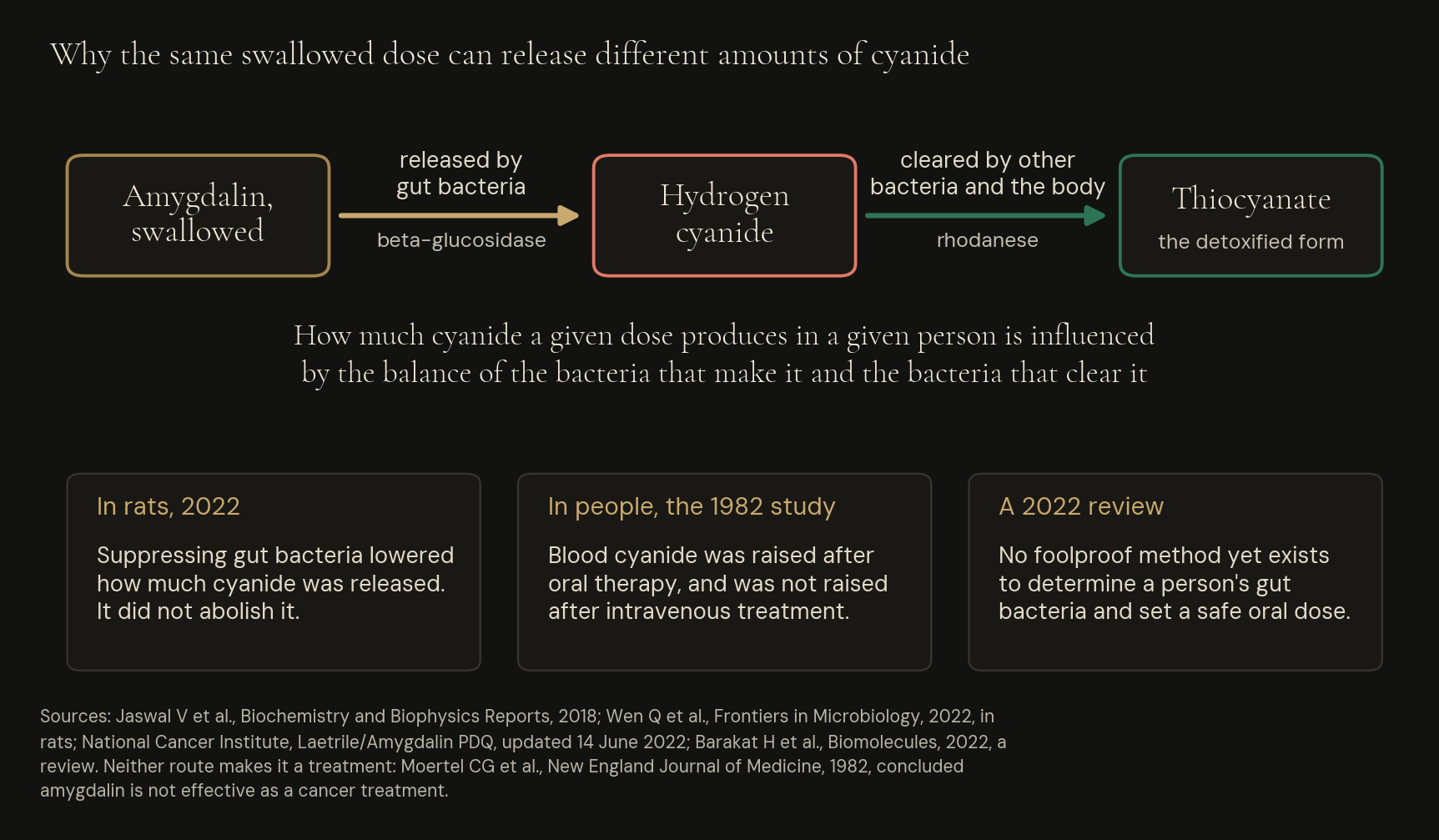
Amygdalin does not release cyanide on its own. It has to be hydrolyzed by beta-glucosidase, and most of that work is done by your gut bacteria.
Anaerobic bacteria in the Bacteroidetes phylum carry high beta-glucosidase activity, and it is their metabolism that converts oral amygdalin into hydrogen cyanide (Jaswal, Biochemistry and Biophysics Reports, 2018). A 2022 study made this concrete by comparing normal rats with pseudo-germ-free rats. Cyanide release was significantly higher when the gut flora were intact. The authors identified specific cyanogenic species, including Bacteroides fragilis (Wen, Frontiers in Microbiology, 2022). The same work found the other half of the picture: species carrying rhodanese and related sulfurtransferases that detoxify cyanide to thiocyanate.
Note the exact shape of that result, because it is a difference in amount and not an on-off switch. Suppressing the flora lowered how much cyanide was released. It did not abolish it. And this is rat data. The authors are explicit that a human gut allows a more complicated picture than theirs did.
Still, the amount of cyanide a given dose produces in a given person is influenced by the balance of two microbial populations. One makes the poison and one clears it.
This has three consequences that matter at a kitchen table.
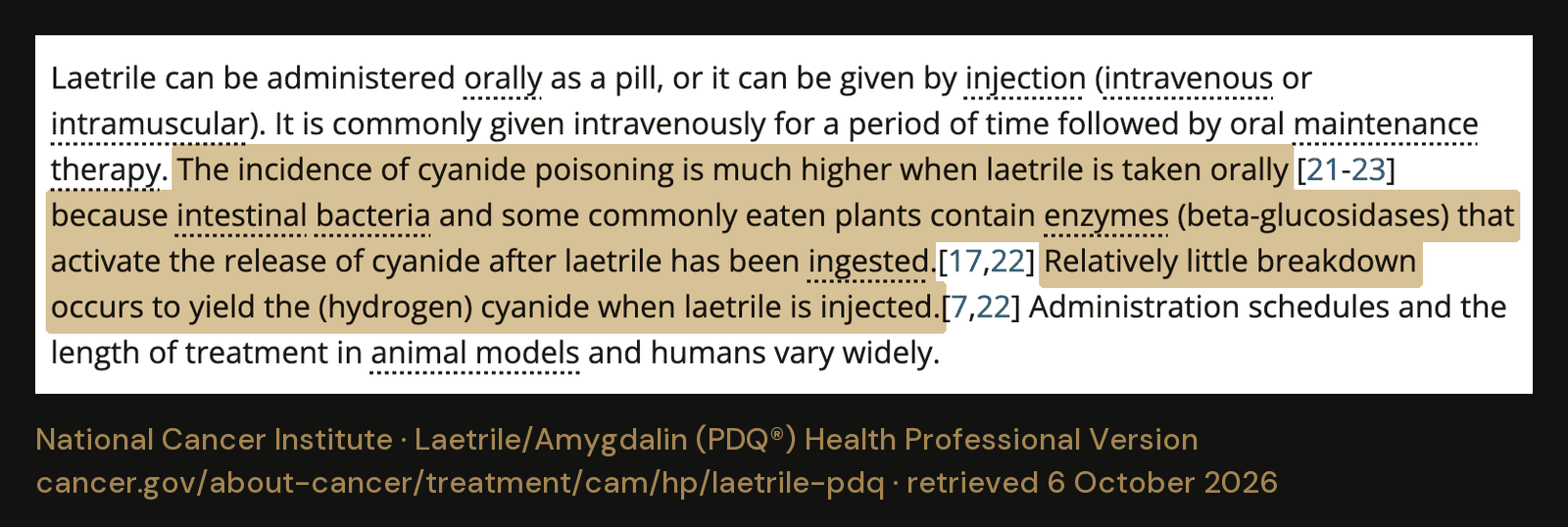
Intravenous and oral are not the same drug. Studies of IV administration found no hydrogen cyanide formation, because the compound never meets the gut flora (Jaswal, Biochemistry and Biophysics Reports, 2018). In the 1982 study, blood cyanide was not elevated after IV amygdalin, and was elevated after oral therapy. NCI states it plainly: oral laetrile causes more severe side effects than injected laetrile.
The dose that was safe for someone else tells you nothing about you. This is why the anecdotes conflict so violently. Somebody’s aunt took apricot kernels for months and was fine. Somebody else seized on their first dose. Both stories can be true, and neither is informative, because they had different bacteria.
And nobody can measure it in advance. A 2022 review put it plainly: amygdalin’s toxicity depends heavily on the variety of bacteria in the digestive tract. There is currently no foolproof method, it says, for determining an individual’s microbial consortium and providing a safe oral dosage (Barakat, Biomolecules, 2022). That is a review’s conclusion about the state of the field rather than a regulator’s. It is the strongest statement on the point that I found in print.
That is not a claim that the dose is unknown because nobody bothered to look. It is a claim that a safe oral dose is not a stable property of the substance.
The vitamin C problem
Now the interaction, which is the detail I would most want a family to know.
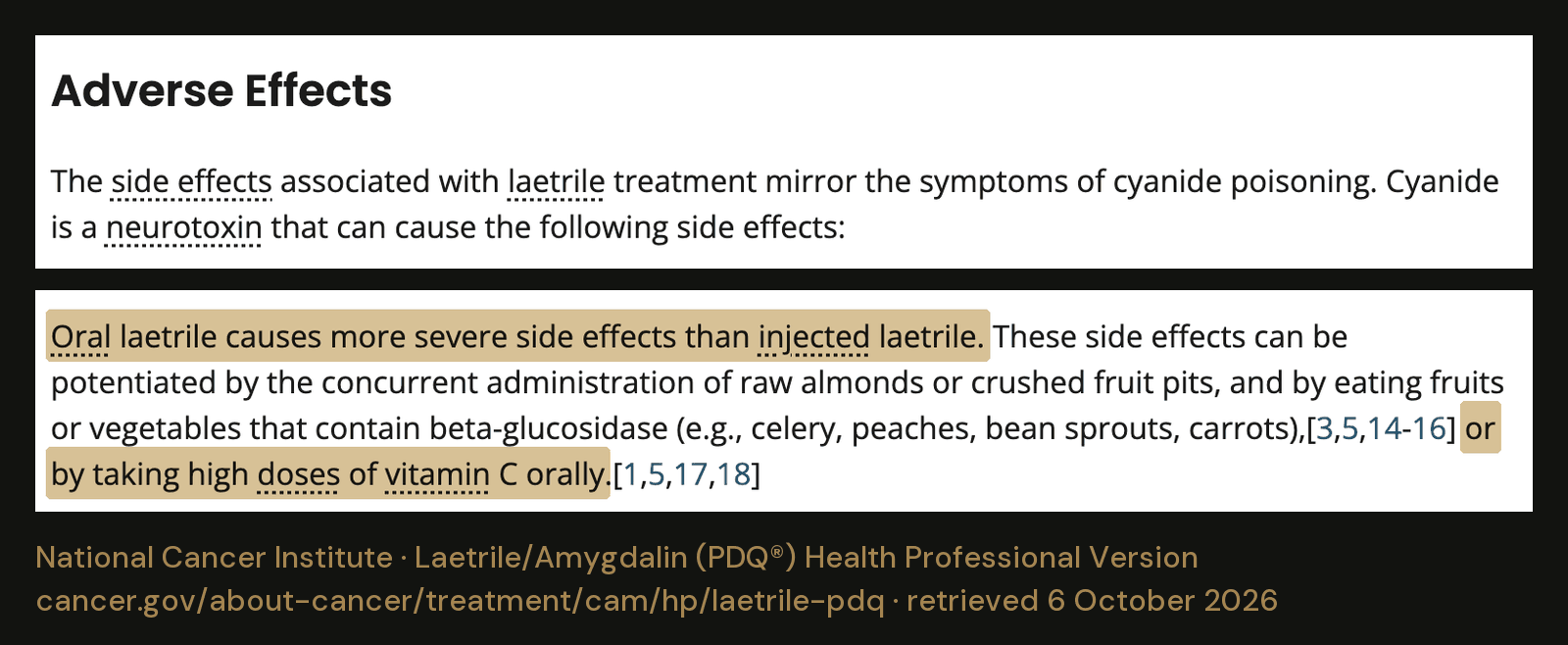
Two bodies with no stake in the argument say the same thing. NCI lists high doses of vitamin C taken orally among the things that make laetrile’s side effects worse. The same list includes raw almonds, crushed fruit pits, and foods containing beta-glucosidase such as celery, peaches, bean sprouts and carrots. Cochrane’s 2015 plain language summary says the risk of serious adverse effects from cyanide poisoning could increase with concomitant intake of vitamin C.
There is one published human case, and it is a large part of the reason those sentences exist. In 2005, a 68-year-old cancer patient came to an emergency department shortly after her first dose of amygdalin with a reduced Glasgow Coma Score, seizures and severe lactic acidosis. She required intubation and ventilation, and responded rapidly to hydroxocobalamin. She was also taking high-dose vitamin C daily, and the authors rated the reaction probable on the Naranjo probability scale (Bromley, Annals of Pharmacotherapy, 2005).
The proposed mechanism runs in two directions at once. Ascorbate increases the conversion of amygdalin to cyanide. It also depletes cysteine, the sulfur amino acid the body uses to detoxify cyanide into thiocyanate. I want to be careful about how much that carries. The conversion half is in vitro, reported in a 1979 letter to JAMA (Backer, JAMA, 1979). The depletion half is guinea pigs (Basu, Canadian Journal of Physiology and Pharmacology, 1983). The human evidence is that single case. It is a plausible mechanism with a documented consequence in one person, not settled human biochemistry, and I would rather say so than oversell it.
What I cannot tell you is how routinely the two are taken together. I went looking for a source establishing that megadose vitamin C is a standard component of the metabolic therapy protocol laetrile is sold inside, and I did not find one. NCI describes that program as a specialized diet, high-dose vitamin supplements, and pancreatic enzymes, and never names vitamin C. So the honest version is narrower than the one I would have written from memory. High-dose vitamins are part of the package NCI describes. Vitamin C specifically is named as a potentiator by both NCI and Cochrane. And there is one published case of the combination nearly killing the person who took it.
The kernels themselves, as food
The European Food Safety Authority looked at raw apricot kernels not as a cancer treatment but as a food, which is the other way people meet this product (EFSA, 2016).
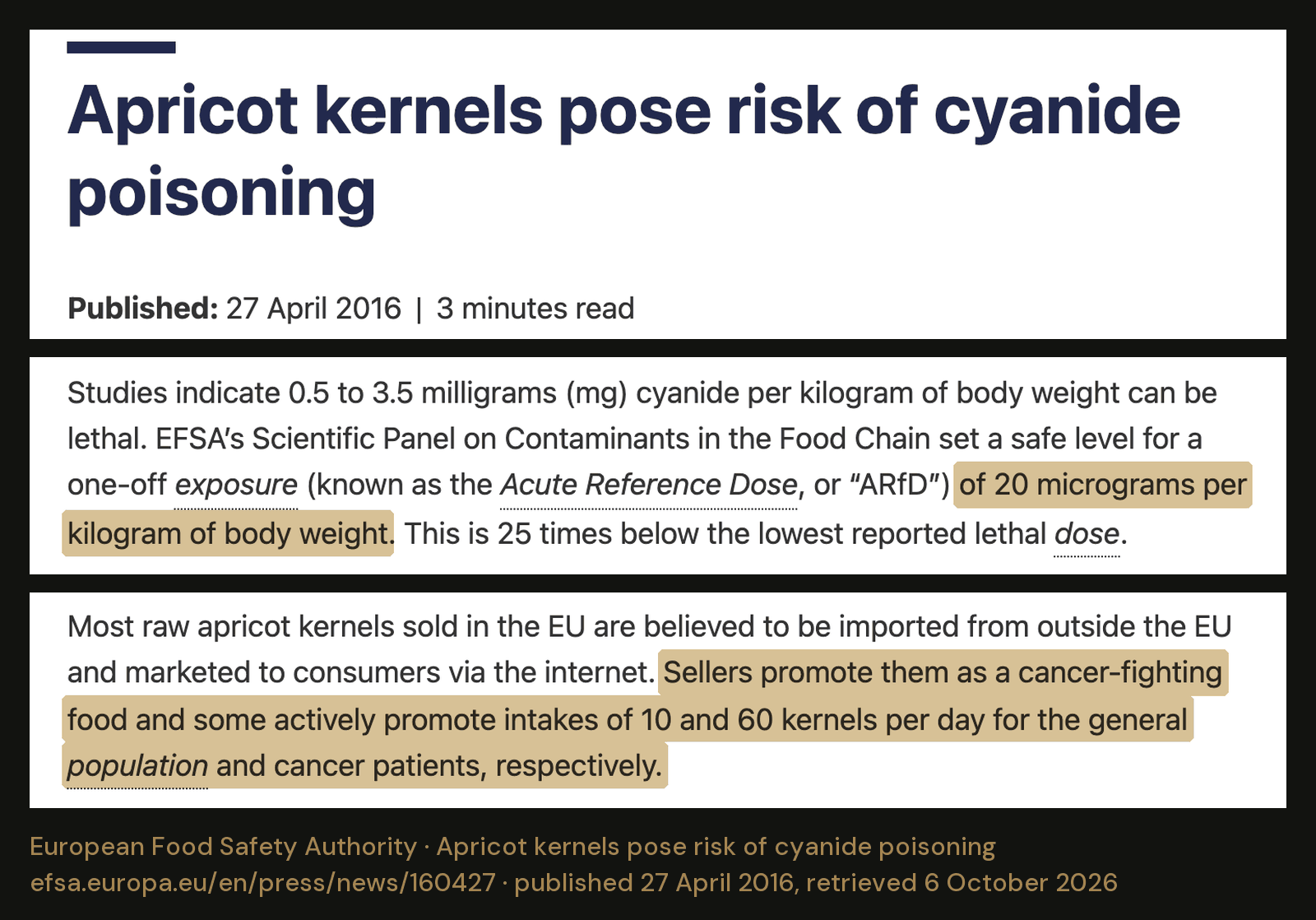
EFSA’s scientific panel on contaminants in the food chain set a safe level for a one-off exposure to cyanide of 20 micrograms per kilogram of body weight. A later EFSA panel confirmed in 2019 that the same figure applies to acute effects of cyanide regardless of the dietary source, so it is not a stale number.
The sentence in EFSA’s own announcement that stops you is not the threshold. It is what the agency says about the sellers. They promote the kernels as a cancer-fighting food, and some actively promote intakes of 10 and 60 kernels per day for the general population and cancer patients respectively.
Sit with the shape of that recommendation for a second. The amount promoted to people with cancer is six times the amount promoted to everyone else. The sicker you are, the more of it you are told to take.
What this looks like in an emergency department
A 4-year-old boy with metastatic ependymoma arrived severely agitated, encephalopathic and unresponsive, with an initial Glasgow Coma Scale of 3. His parents, on detailed questioning, reported giving him intravenous and oral “vitamin B17” along with oral apricot kernel. Serum cyanide was markedly elevated. He was treated and recovered (Sauer, Wiener Medizinische Wochenschrift, 2015).
A 72-year-old developed life-threatening cyanide poisoning after ingesting a dietary supplement containing amygdalin. It was identified in prehospital care and treated successfully with hydroxocobalamin (Cmorej, Prehospital Emergency Care, 2021).
A 67-year-old man appeared hypoxic on pulse oximetry under general anesthesia, and nobody could work out why. He then admitted to daily self-prescription of apricot kernel extract for five years. Cyanide toxicity was confirmed on blood analysis, and his saturations normalized after he stopped (Konstantatos, BMJ Case Reports, 2017).
Everyone in those reports survived. That is worth saying. It is also worth noting what saved them: somebody eventually said out loud what the patient had taken. In the 4-year-old’s case, it took detailed questioning of the parents in an emergency department while the child was unresponsive. In the 67-year-old’s, it took a general anesthetic and an oximeter reading nobody could explain.
This is not a historical story
In May 2024, the FDA issued a safety alert on bitter apricot seed products sold under the Apricot Power brand. Samples were collected by the Texas Department of State Health Services and analyzed by the Commonwealth of Virginia’s Division of Consolidated Laboratory Services. That lab determined that the products identified by lot number contain high levels of amygdalin which, when consumed, could lead to fatal cyanide toxicity.
What happened next is the part worth reading twice. On 8 May 2024 the firm declined to recall the products. As of 24 May 2024 it had continued to decline a voluntary recall. The FDA issued the alert because the products stayed on the market. It advised consumers to stop using and dispose of them. It told them to mention the products to a health care provider even if they had not been used recently.
None of this is new to the agency. In February 2021 the FDA wrote to a seller of bitter apricot seeds and laetrile capsules. It quoted the company’s own website claiming that vitamin B17 “works in the control of cancer.” It concluded that the products are unapproved new drugs and are misbranded.
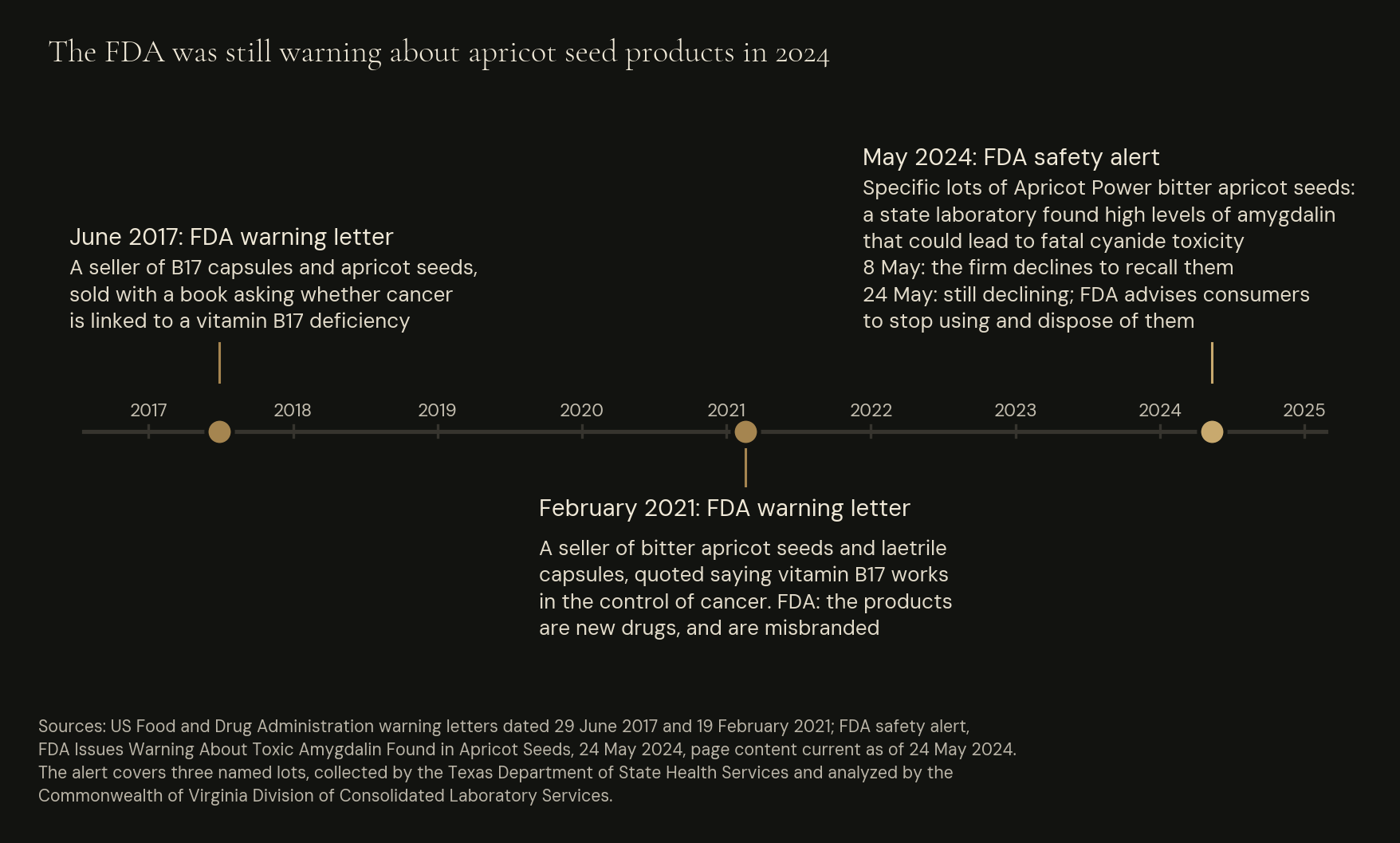
That is the state of play, not in an archive, but in the last two years.
What this evidence cannot tell us
The cell-culture findings are real and I am not dismissing them. Amygdalin does things to cancer cells in a dish. What has never been shown is that this translates into benefit in a person, and the one large human study that looked found nothing substantive.
That study is 44 years old. Its methods are of their era, it had no control arm, and a modern investigator would design it differently. My argument is not that it is beyond criticism. It is that it was large, it enrolled patients well enough to respond, it used the protocol as actually practiced, and its result was not close.
The microbiome work is animal and in vitro. The direction is well supported; the precise human numbers are not settled.
And EFSA’s reference dose is a conservative food-safety threshold with uncertainty factors built in, not a poisoning threshold. Exceeding it does not mean you will be harmed. It means you have left the range anybody is prepared to call safe.
There is also active work on nanoparticle formulations intended to deliver amygdalin without the cyanide exposure (Spanoudaki, 2023). If that ever produces human results, this article will need revisiting. It has not yet.
What would change my answer
A controlled human trial showing benefit. That is the whole list. I searched ClinicalTrials.gov, the US government’s register of clinical studies, for amygdalin and laetrile in August 2026, and found no registered study of either as a cancer treatment.
Unlike fenbendazole, where I found no registered cancer trial, here the money was found, the study was run, and it was negative. And the product is still being sold today, largely to the same people, under the same name.
What I would do
If someone in your family is taking apricot kernels, laetrile, or anything sold as vitamin B17: tell the oncology team. Before the next appointment, not eventually. Cyanide toxicity presents as encephalopathy and unexplained lactic acidosis, and if nobody knows what was taken, that gets worked up as something else while the clock runs.
If it is being taken alongside high-dose vitamin C, both NCI and Cochrane name that combination as raising the risk, and it is worth knowing before rather than after.
And if the appeal here is the underlying idea, that something plant-derived might do real work against cancer, then the honest answer is that it already has. Vincristine came out of the Madagascar periwinkle. Paclitaxel came out of the Pacific yew. Both of them earned it the way this one did not: somebody ran the test that could have gone badly, and then reported what happened.
This is education, not medical advice. Nothing here is a recommendation to start or stop any treatment. If you are in treatment, those decisions belong with your oncology team, and if something is urgent, call them. In an emergency, call 911.
The piece on medicinal mushrooms (turkey tail, reishi and maitake) ran on 9 September. It is where this series gets more generous than most readers expect.
I wrote two books on nutrition during cancer treatment before I wrote any of these articles, one for patients and one for caregivers, in English and in Spanish.
References
Moertel CG, et al. A clinical trial of amygdalin (Laetrile) in the treatment of human cancer. The New England Journal of Medicine. 1982;306(4):201-6. https://pubmed.ncbi.nlm.nih.gov/7033783/
Milazzo S, Horneber M. Laetrile treatment for cancer. The Cochrane Database of Systematic Reviews. 2015;(4):CD005476. https://pmc.ncbi.nlm.nih.gov/articles/PMC6513327/
Milazzo S, et al. Laetrile for cancer: a systematic review of the clinical evidence. Supportive Care in Cancer. 2007. https://consensus.app/papers/details/b602dfa842c251f986ab05614a061edc/
National Cancer Institute. Laetrile/Amygdalin (PDQ) Health Professional Version. Updated 14 June 2022. https://www.cancer.gov/about-cancer/treatment/cam/hp/laetrile-pdq
Spanoudaki M, et al. Amygdalin as a Promising Anticancer Agent: Molecular Mechanisms and Future Perspectives for the Development of New Nanoformulations for Its Delivery. International Journal of Molecular Sciences. 2023. https://consensus.app/papers/details/163eb2c494bc54368db5f4551e33bd68/
Jaswal V, et al. Effects of the Gut microbiota on Amygdalin and its use as an anti-cancer therapy. Biochemistry and Biophysics Reports. 2018. https://consensus.app/papers/details/e395e943d19c5ce18747c842005072fe/
Wen Q, et al. Impact of intestinal microbiota on metabolic toxicity and potential detoxification of amygdalin. Frontiers in Microbiology. 2022. https://consensus.app/papers/details/c8bfed0d37a9514cadfc614316e388e6/
Barakat H, et al. Amygdalin: A Review on Its Characteristics, Antioxidant Potential, Gastrointestinal Microbiota Intervention, Anticancer Therapeutic and Mechanisms, Toxicity, and Encapsulation. Biomolecules. 2022. https://consensus.app/papers/details/9a9dcfc72d5d55bfa04db734fb7e094d/
Bromley J, et al. Life-Threatening Interaction Between Complementary Medicines: Cyanide Toxicity Following Ingestion of Amygdalin and Vitamin C. Annals of Pharmacotherapy. 2005. https://consensus.app/papers/details/3e395d27b6975b428ce4851f69798a7e/
Basu T.K. High-dose ascorbic acid decreases detoxification of cyanide derived from amygdalin (laetrile): studies in guinea pigs. Canadian Journal of Physiology and Pharmacology. 1983. https://consensus.app/papers/details/5ae3fb2b366d5b519780cc5656626d1a/
Backer R, et al. Cyanide production from laetrile in the presence of megadoses of ascorbic acid. JAMA. 1979. https://consensus.app/papers/details/ac7187bb2f5655dcb7933a0ba1df301d/
EFSA CONTAM Panel. Acute health risks related to the presence of cyanogenic glycosides in raw apricot kernels and products derived from raw apricot kernels. EFSA Journal. 2016;14(4):4424. https://doi.org/10.2903/j.efsa.2016.4424 (EFSA announcement, 27 April 2016: https://www.efsa.europa.eu/en/press/news/160427)
EFSA CONTAM Panel. Evaluation of the health risks related to the presence of cyanogenic glycosides in foods other than raw apricot kernels. EFSA Journal. 2019;17(4):5662. https://pmc.ncbi.nlm.nih.gov/articles/PMC7009189/
Sauer H, et al. Severe cyanide poisoning from an alternative medicine treatment with amygdalin and apricot kernels in a 4-year-old child. Wiener Medizinische Wochenschrift. 2015. https://consensus.app/papers/details/d2455e266b7951d7991a4a248832d13d/
Cmorej P, et al. Life-Threatening Cyanide Intoxication after Ingestion of Amygdalin in Prehospital Care. Prehospital Emergency Care. 2022;26(3):455-458. https://pubmed.ncbi.nlm.nih.gov/33955827/
Konstantatos A, et al. An unusual presentation of chronic cyanide toxicity from self-prescribed apricot kernel extract. BMJ Case Reports. 2017. https://pubmed.ncbi.nlm.nih.gov/28893740/
US Food and Drug Administration. FDA Issues Warning About Toxic Amygdalin Found in Apricot Seeds. Safety alert, 24 May 2024. https://www.fda.gov/food/alerts-advisories-safety-information/fda-issues-warning-about-toxic-amygdalin-found-apricot-seeds
US Food and Drug Administration. Warning letter, Richardson Nutritional Center, LLC / Nutriseeds, Inc. 19 February 2021. https://www.fda.gov/inspections-compliance-enforcement-and-criminal-investigations/warning-letters/richardson-nutritional-center-llcnutriseeds-inc-610544-02192021
US Food and Drug Administration. Warning letter, God Quest, Inc. d/b/a Creation Today. 29 June 2017. https://www.fda.gov/inspections-compliance-enforcement-and-criminal-investigations/warning-letters/god-quest-inc-dba-creation-today-522709-06292017
Vitae Arete provides nutrition education and does not diagnose, treat, or manage cancer, nor prescribe or manage medication. This article is general information, not individualized medical or nutrition advice, and does not create a dietitian–client relationship. See the full disclaimer.